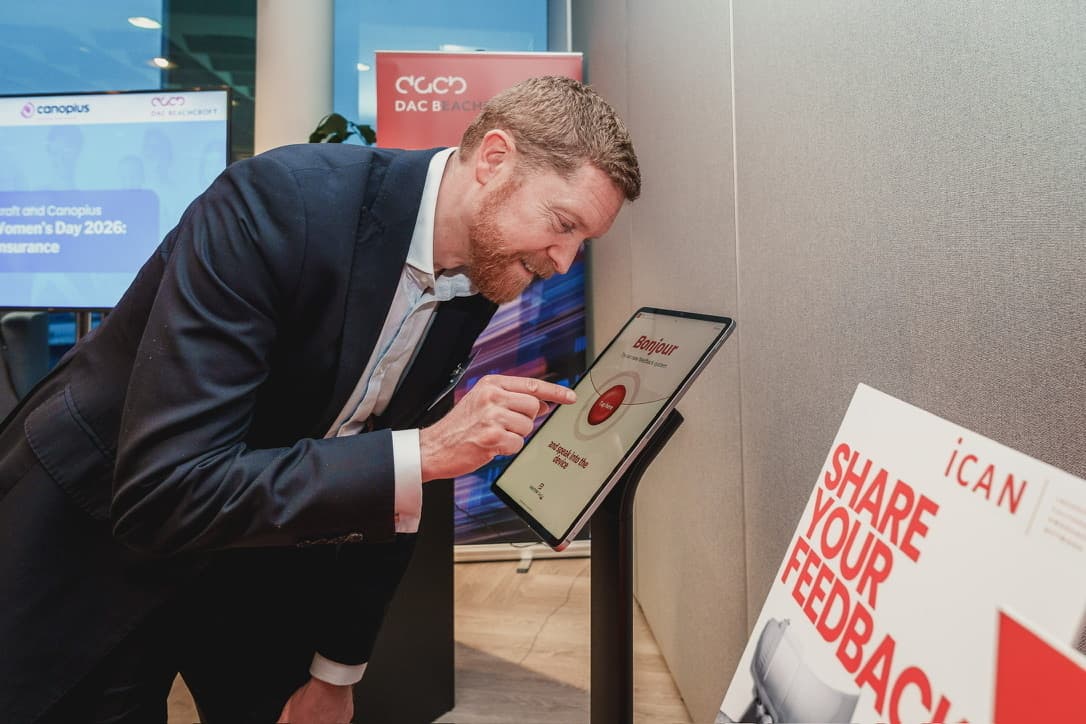


"Online, we're used to seeing the whole funnel. HoxtonAi's integration with Shopify POS helps bring that type of visibility into our physical stores."
Michael Gates, Regional Manager, TALA
Bringing e-commerce-style visibility into physical retail
TALA is one of the UK's most exciting activewear brands: digitally native, community-led and growing fast.
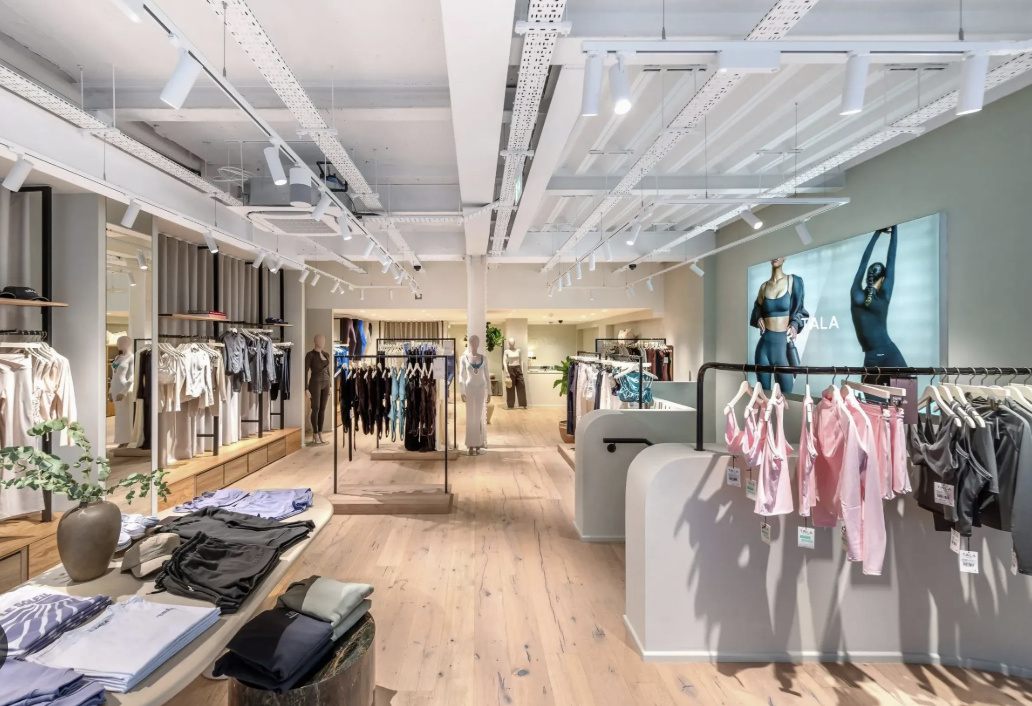
As the brand expands its physical retail presence, stores are becoming an increasingly important part of the customer experience. With a small but growing store estate and ambitious plans to scale retail quickly this year, TALA wanted the right measurement foundations in place from the start: a way to understand not just what each store sells, but how effectively each store converts the opportunity it has.
Stores give customers the chance to discover the product in person, try pieces on, speak to the team and experience TALA beyond the website or social channels.
But physical retail creates a familiar challenge for e-commerce-first brands.
Online, the funnel is visible. You can see who visits, what they browse, what they add to basket and what they buy.
In-store, Shopify POS gives clear sales data, but without footfall it is much harder to understand the full picture. You know how many people purchased, but not how many people walked through the door.
That makes it harder to understand true store performance.
"Sales are obviously important, but revenue alone doesn't tell you the full story. A store might have a great day because it was busy, or because the team converted brilliantly. We wanted to separate those things."
The challenge
TALA wanted a clearer way to compare store performance across its retail estate.
Revenue alone was not enough. A higher-selling store might simply have more visitors. A quieter store might actually be converting better. A low-sales day might reflect weak demand, poor weather, fewer visitors, or a missed conversion opportunity.
To manage stores effectively, the team needed to understand:
- How many people entered each store
- How many visitors converted into customers
- How conversion varied by store, day and time
- How staffing levels matched customer demand
- Which stores and teams were setting best practice
The key metric was not just sales. It was sales in context.
"The metric we really care about is sales per head. It gives us a much more useful view of performance because it takes footfall into account."
Why HoxtonAi
TALA uses Shopify POS, so the priority was not just finding a footfall counter. The priority was finding a solution that worked naturally with Shopify.
HoxtonAi's Shopify integration connects accurate footfall data directly with Shopify POS sales data. The result is a clear view of visitors, sales and conversion inside a native Shopify app.
TALA downloaded the app through Shopify, purchased the hardware and data through a single Shopify payment, and could then view store performance metrics in one place.
For the retail team, that meant no manual reconciliation, no separate reporting workflow and no complex data project before the information became useful.
"It was a seamless integration with Shopify."
What TALA can see now
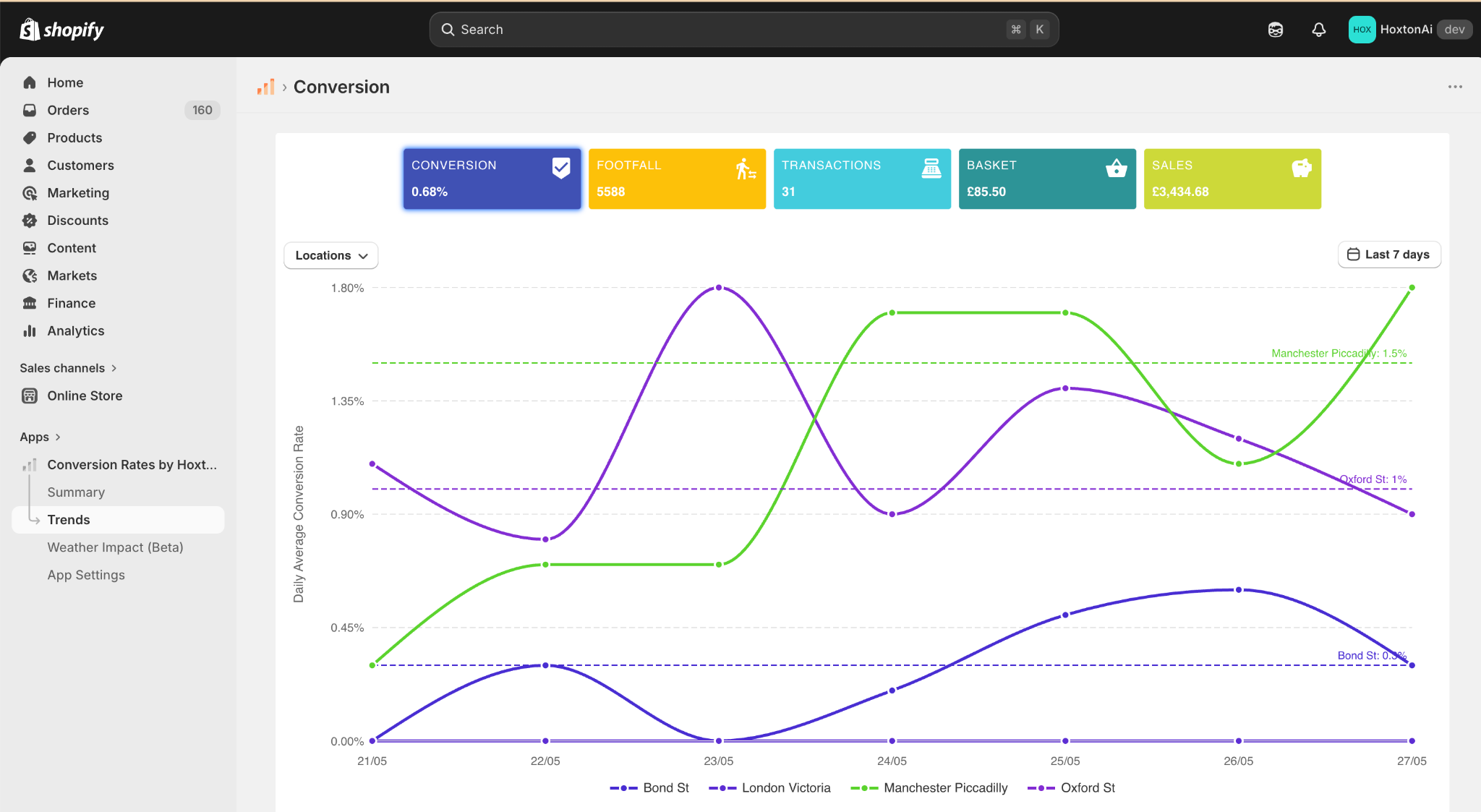
With HoxtonAi, TALA can measure the in-store funnel more like an e-commerce funnel.
The team can now see:
- Footfall: how many people entered the store
- Sales: transactions and revenue through Shopify POS
- Conversion: the percentage of visitors who purchased
- Sales per head: revenue generated per store visitor
- Trends by store, day and time
This makes performance conversations more specific.
If sales are up, the team can see whether that was driven by higher footfall, stronger conversion or better spend per customer. If sales are down, they can understand whether the issue was fewer visitors or a lower conversion rate.
That makes it much easier to compare stores fairly and identify what is working.
"It gives us a shared language. Store teams, regional management and leadership can all look at the same numbers and understand what's really happening."
Better decisions across stores
The data helps TALA make better day-to-day decisions as well as better long-term retail decisions.
For staffing, footfall data shows when customers are actually coming into store. That helps the team align rotas with real demand: avoiding understaffing during busy periods and overstaffing when the store is quieter.
For team performance, conversion data helps identify best practice. If one store is consistently converting more visitors, the team can look at what is happening on the floor and share those learnings across locations.
For future openings, the data gives TALA a stronger foundation. Each store becomes a source of insight that can help inform the next one.
"When you're opening stores, you want every new location to make the whole estate smarter. The more consistent the data is, the easier it is to spot what works."
The result
HoxtonAi gives TALA a clearer, more actionable view of physical retail performance.
By connecting footfall data with Shopify POS, TALA can understand not just what each store sold, but how effectively each store converted the opportunity it had.
For an e-commerce-first brand, that is a significant shift. Physical retail can now be measured with more of the clarity and discipline of online retail: visitors, conversion and sales.
"HoxtonAi gives us the context behind the sales number. That's what makes the data useful. It helps us understand performance, support our teams and make better decisions as we grow."
For Shopify POS retailers
HoxtonAi helps Shopify POS retailers connect accurate footfall data with sales data, giving teams a clear view of in-store conversion inside Shopify.
For fast-growing brands opening or scaling physical stores, it makes it easier to bridge the gap between online analytics and in-store decision-making.